
Why I Love my Blue Tang
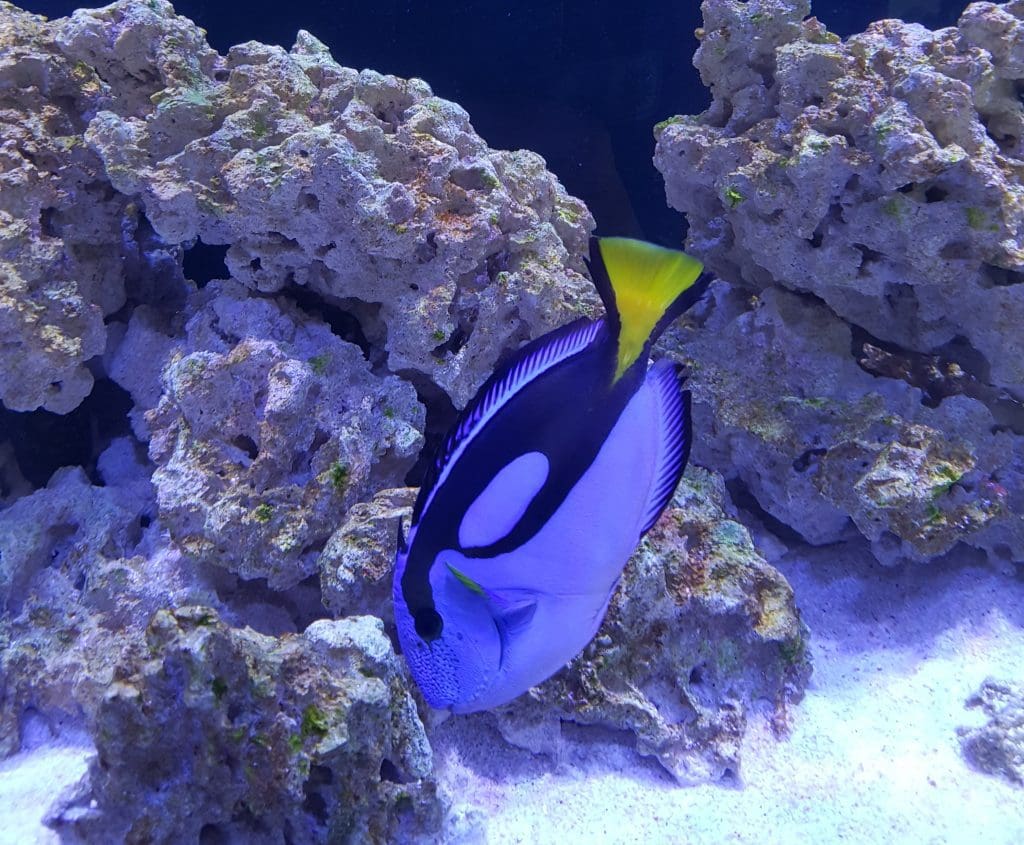
This article takes a more personal look at Blue Tangs (also known as Regal Tangs or Hippo Tangs).

A note on Blue Tangs
We have made the assumption that you are aware that Blue Tangs can grow up to twelve inches (30cm) in size and that they require the space to enable them to be a large fish.
From the moment a Blue Tang is introduced into your aquarium, you will quickly notice how incredibly energetic they are.
But, equally so, you may also stand a high chance of noticing that they are prone to stress, resulting in Marine White Spot (Cryptocaryon irritans [1]).
My Blue Tang arrived in my 4ft tank 4 years ago, the size of the tip of my thumb. Within days she had white spot brought on by the stress of being translocated from the sea, into a holding facility, then flown to the UK to a holding facility, before being picked by my LFS and then finally being purchased by me. A decision to purchase a Blue Tang is not a light one.
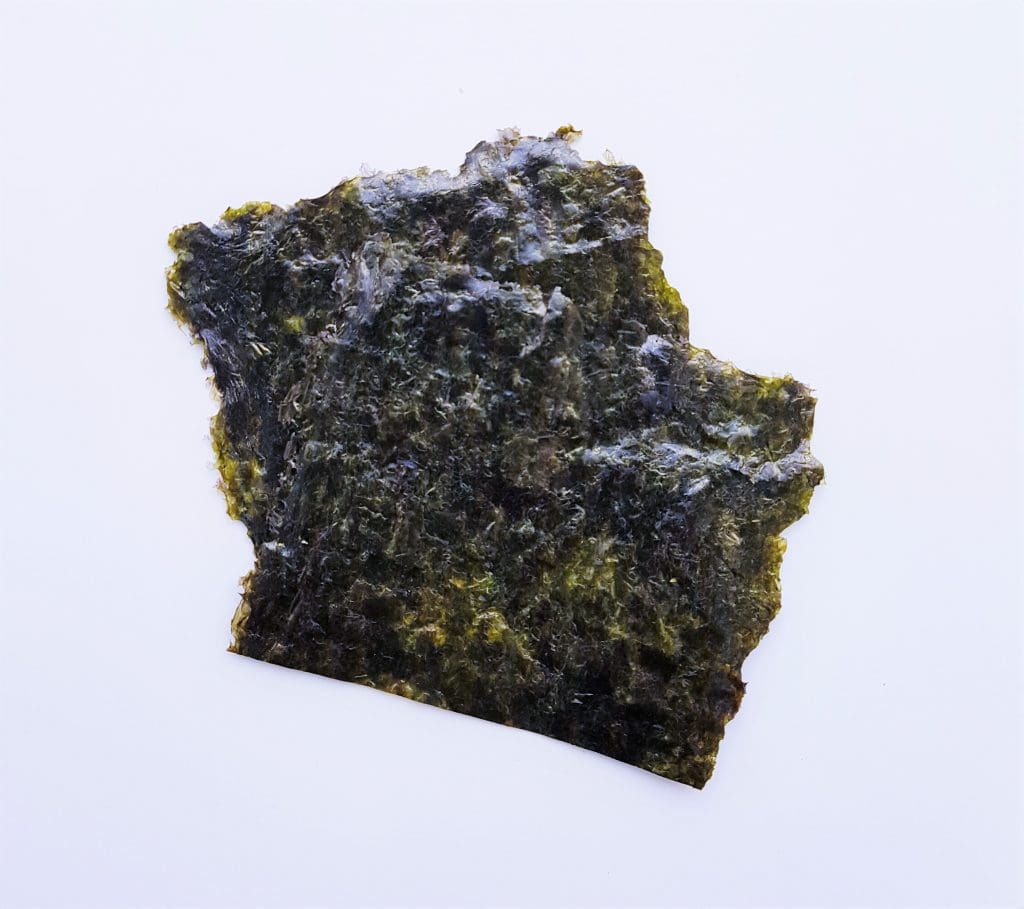
With a plentiful supply of Nori seaweed and frozen food, her immunity built up slowly but surely and she was eventually strong enough to fight off the white spot after four months.
A note on White Spot
I have never treated my fish for white spot and never lost a fish because of it.
In my experience they are capable of fighting the disease themselves provided the environment and food they are given boosts and maintains their health. (See this article to read more on White Spot.)
As a tiny little blue streak she would whip around the 4ft tank at such speed, ‘playing’ with the Chromis which were the same size as her.
She would know when to expect food, both Nori[2] and frozen, and would hang around expectantly on the side of the tank I usually dip the food in, almost in an excited manner.
I introduced a Yellow Tang, and together they would spend time trying to ascertain who was the boss of the tank by backing into each other.
Years later they still feel the need to show their dominance although there has never seemed to be a clear winner. The majority of the time they swim around together happy in each others company.
My SPS corals grew and so did my Blue Tang. SPS frags became toys for her to remove from the frag rack and toss them unceremoniously around the tank, often killing the frags and the corals they landed on.
A frag rack was no longer an option with her destroying them all in her playful manner.
Without the frag rack there, she would pick random things up from the sand such as old dead coral or shells and haul them around the tank. She reminded me of a naughty little puppy at times.
With the corals doing very well, the swimming space became limited, and by this time she was measuring approximately 4” in length after almost 4 years.
A bigger home for our Blue Tang!
We had decided from the very beginning that if we were going to buy a Blue Tang, we would need to accommodate it for the entirety of its life. Considering that the life span of a Blue Tang can be up to 20 years old, buying a Blue Tang is a considerable commitment on the part of the aquarist.
Five weeks ago we introduced her to her new home. A six hundred litre 5ft tank with double the space to swim. She was terrified. She lay in a corner and didn’t move for the day but, by the next day she was a little feeling way more at home.

Unfortunately due to a reduced level of dissolved oxygen (also known as Hypoxia[3]) in the new aquarium, we had to transfer her and her tank mates back to their old tank.
Once the oxygen concentration in the water was back to the correct level, we moved all the fish back over again.
What happened next was quite remarkable. She didn’t cower, she wasn’t terrified and realized exactly where she was after two weeks. Who says fish don’t have memories!
Blue Tangs in my experience are the most amazing fish and as long as you have a large enough, established saltwater aquarium, you will love them as much as I do, I’m certain!

They are fully aware of what is happening on the other side of the glass which makes up their tank. They are playful in a puppy-like manner and can be very cheeky often pestering other fish just because they can.
I have never found our Blue Tang to be aggressive. In fact when I introduced the latest addition, a smaller Gold Rim Tang, our Blue Tang became quite frantic. She began swimming up and down a single corner of the tank exhausting herself.
We decided to turn the lights off for the day to calm her down.
She stopped immediately, and went to her rock to settle down.
The following morning everything was fine, and all three tangs now get on well.
Blue Tangs certainly break the mould of ‘just a fish’ once you get to know them. In my opinion, the idea that you can just replace a Blue Tang (or any large fish) that has outgrown your tank for a smaller one is the equivalent of moving your beloved family dog on just because it is older.
[1] https://pdfs.semanticscholar.org/1257/4fcd2a2bd38d348d553ba8a60fbb6952d340.pdf
[2] https://en.wikipedia.org/wiki/Nori
[3] https://thefisheriesblog.com/2013/05/13/hypoxia/